I went to a dance party that ends at 10pm on a Saturday. It was a total banger.
In a city that thrives on nightlife, we’re under-building for people on different schedules.
I was standing on a smoking patio at 6pm on a Saturday in downtown Austin with a can of $5.25 Waterloo Sparkling Water sweating in my hand. This is not a typical Saturday evening for me these days, but I was having a blast? I was out with my people celebrating a good friend’s birthday, and I was having a great time. The playlist and I had some unresolved tension, but that is a conversation for later in this essay.
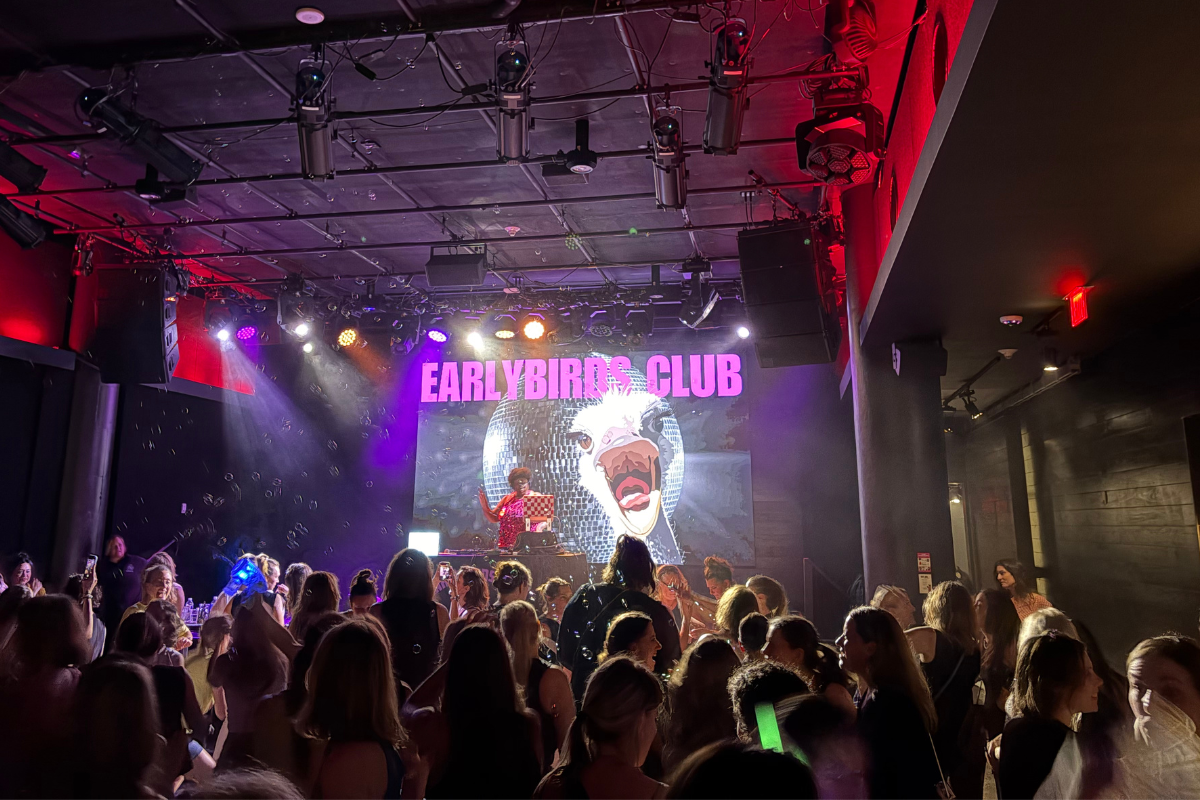
The event was Earlybirds Club, held at 3TEN Austin. The premise: a dance party for women, trans, and non-binary folks who, as they describe it, "have shit to do in the morning." Six to ten pm. Throwbacks from the 80s, 90s, and 2000s. A curated room where you can bring the house down without paying for it for the next three days.
Tickets were $40. The place was packed. And that alone tells you something.
Adulthood got a bigger menu
A few months ago I was watching season 2 of The Sopranos and had to stop and Google Tony Soprano's age (as portrayed in the show). He reads like a man in his mid-fifties. He is supposed to be 39. Carmela, at 38, already moves with the gravitas of someone who is fully baked and seasoned as an "adult." Season 2 was filmed in 1999 and takes place in the year 2000, which is almost exactly the moment before the internet changed what adulthood was allowed to look like.
TV, movies, magazines, and print media were the megaphones for culture back then. What an adult was, how an adult dressed, what an adult did on a Saturday night, that was handed to you from one direction, through a pretty narrow aperture. And you either fit the frame or you didn't.
The internet gave Millennials a completely different deal. We grew up alongside it, and because of it, we got to pick adulthood from a much larger menu. You could find the niche for your career, your relationship structure, your social life. The algorithm showed you people living versions of life you didn't know were options. "You can't be what you can't see," as Marian Wright Edelman put it, and suddenly you could see everything.
This is why I can be fully adulting (freelance business, gym in the afternoon, actual bedtime at 10pm) and still be fundamentally the same person who used to play a show at Cheer Up Charlies with her band and then go lose her mind at Barbarella on Jimmy Eat Wednesdays until 2am. Both things are true simultaneously. My mind is the same. My body just has… some feedback now.
Earlybirds Club was built for exactly this person. Forty-nine-year-old Laura Baginski and her friend Susie Lee created it because they missed dancing and had zero interest in starting a night at 10pm or sharing a floor with a crowd that wasn't theirs. It launched in Chicago in early 2024, sold out almost immediately, and now runs events across the US.
And Earlybirds is not the only signal Austin has been sending about this. Morning DJ sets have become their own real scene here, the kind of thing that sounds almost too Austin to say out loud, right alongside run clubs and matcha spots. And yet I cannot get into a Mushroom Cowboy morning DJ set because the line is around the block. I genuinely love that this city built demand for that. It tells you something real about what people actually want to do with their time.
The demand existed before the event did, and that is usually the clearest signal you can get.
What ~400 women confirmed
Midway through the night, the host brought people up to share what they were celebrating. Birthdays, mostly. The youngest was 32. The oldest was 55. The median sat around 43.
The biggest cheers of the night went to the people celebrating a divorce. And to one woman who announced she had been unemployed for 28 weeks and had just gotten a job that day. The whole venue practically shook. In a room full of women who likely follow the same feeds I do, who have watched the same LinkedIn connections disappear into layoff posts this past year, 400 people screaming for someone who got a job felt like something genuinely human.
Later, they put on Alanis Morissette's "You Oughta Know." The DJ said this song is “cathartic” at their events; “feel free to sing your heart out.” About 400 of us screamed every word. I knew in my heart it was a little cringe. I did not care at all. The room had already earned it. The point was that it was for us, and we all knew it.
The version that does not exist yet
Here’s where I cannot turn off the part of my brain that thinks about brand strategy and what makes experiences actually work.
The concept of a 6-10pm dance party works. And I get that this was an event that was supposed to cater to a wide audience by design. But the curation layer is a real opportunity that could be dialed in at other events. Case in point:
The playlist. Shaggy, Gwen Stefani's "Hollaback Girl," Juvenile's "Back That Azz Up" are songs I did not particularly vibe with back in the day either. There was no LCD Soundsystem. No Bad Bunny. Nothing with edge. As someone who has actually played a stage in this city, the playlist choices felt like the safe call, not the right one. The fix is specialization: a soul night, a 2008 indie dance night, a vinyl DJ set, a night that commits to a specific corner of what this audience actually listened to rather than casting the widest possible net.
The DJ execution. Full three-minute tracks, played out in their entirety. If you are not feeling "Wannabe" from the first note, you are committed. Blending and cutting would move the room better, and it signals craft.
The price point. $40 for entry and $5.25 for one can of sparkling water. I understand the venue economics. And I stayed, and I had a great time. But that pricing structure creates a ceiling on the community you're building. The people who would love this most should be the easiest to get in, not the most priced out.
The bigger opportunity here is actually for the venues themselves to realize that this (successful) event is a case study of how this could be an opportunity for them to utilize the advantages they already have.
A club that already owns its space and its staff could run a version of this at a lower entry price, generate early-evening revenue before a full night opens up, and build real loyalty with a demographic that has disposable income and will tell everyone they know about a good experience. You would not do it every week. Scarcity is part of what makes it feel like a curated, special moment. Once a month, set hours, and then the night opens up to their larger customer base. Austin has the nightlife infrastructure. The demand is already here.
The part I keep thinking about
The strategist in me left with a list of what could be sharper (I can’t help it!). The musician in me who showed up to dance with her friends left with a genuinely good night. Both of those things being true in the same room is not nothing, and it is actually kind of rare. Austin has been ahead of this particular curve before, and the appetite is only getting louder. The room that gets all of it right at the same time, the concept, the curation, the price, the craft, is going to be very hard to get into. I cannot wait for that room to exist.